

What should you consider when planning to buy a guitar? It can be overwhelming, especially if you're new to the world of musical instruments. To help you out, we've listed the 7 most important things to consider when buying a guitar.
Are you about to buy a guitar? Still unsure what to look for?
We at GitaarBarbaar have bought and sold dozens of guitars recently. We know exactly how to distinguish a good guitar from a bad one. Let's not keep this knowledge to ourselves, but share it with you! In this article, you'll discover 7 things you should pay extra attention to when buying a guitar. Read on, use the insights, and find your dream guitar.
Things to pay extra attention to when buying a guitar
- The type of guitar
- The playability
- The type of wood
- New vs. used
- The hardware
- The guitar neck
-
Your budget
Consider the type of guitar you are buying (acoustic vs electric)
Every guitarist chooses their first or next guitar based on the music they want to make. If you're a Dire Straits fan, you'll likely be drawn to a fiesta red electric guitar to deliver those beautiful solos.
When buying a guitar, it's important to decide which type suits you best: acoustic, electric, or classical. Each type has unique characteristics and is suitable for different musical styles.
When purchasing an electric guitar, pay special attention to the pickups: they are crucial to the sound. Single-coil pickups produce a clear and sharp sound, while humbuckers produce a fuller, heavier sound.
Going for an acoustic guitar? Then pay extra attention to the shape and construction of the guitar. For example, a dreadnought model produces deeper bass, while an auditorium offers a more balanced sound.
If you do choose a classical guitar, which is often called a "Spanish guitar," pay extra attention to the woods used for the top, sides, and back of the guitar.

2. Pay attention to playability when you are a beginner guitar player
Have you decided which type and model of guitar suits you best? Then perhaps the most important characteristic of a guitar is its playability.
Playability refers to how easy it is to use the guitar. This is determined by the action and neck thickness.
- Action: The height of the strings above the fingerboard should be low enough to press easily, but not so low that you experience fret buzz.
- Neck Thickness and Fingerboard Width: A thinner neck and narrow fingerboard can make it easier to form chords, especially for smaller hands.
Are you enthusiastic about the guitar but wondering if it's too late to learn, or if you're already a bit older? Don't worry, you can still learn to play perfectly well even if you're a bit older. Read our blog post: Learning to play guitar later in life?
3. Pay extra attention to this when buying a Spanish guitar
Are you going for a Spanish guitar? Then pay extra attention to the woods used for the top, sides, and back of the guitar. The shape of a Spanish guitar is almost always the same, making the difference in wood the most important variable that impacts the sound.
For example: The Flamenco guitar is often made of spruce wood, which provides a bright and sharp attack, while a concert guitar is often built of rosewood.
4. Look at other things when buying a used vs. new guitar
Are you going for a new or used guitar? Even then, there are differences! A warranty is very important for a new guitar. Also, check if the guitar is set up to your needs. Guitars that come straight from the factory are often poorly set up.
5. The quality of hardware & the parts of a guitar
Pay special attention to the quality of a guitar's hardware. This significantly impacts the instrument's durability and sound. The three most important components are the tuners, bridge, and electronics, which we'll discuss in more detail below.
- Tuning Machines: Reliable tuning machines are essential for keeping your guitar in tune. They must turn smoothly and hold the tuning well.
- Bridge: A sturdy and well-designed bridge contributes to the guitar's stability, sustain, and tone. Electric guitars come in various types of bridges, including fixed bridges and tremolo systems.
- Electronics: The quality of the potentiometers, switches, and wiring can affect the reliability and sound of an electric guitar. Good electronics prevent malfunctions and sound loss.
It's worth investing in a guitar with high-quality hardware to ensure long-lasting playing pleasure and superior tone.
6. Adjusting the guitar neck and intonation
You can have the best guitar in terms of wood type, hardware, parts, etc., but with a crooked neck you can't do much. In addition to the action and neck thickness (playability), good intonation is essential for an optimal playing experience.
This means the guitar must be properly tuned in all positions. Check this by playing chords and notes at different points on the neck. Have a professional check and adjust the tuning and intonation for the best results.
A good guitar neck is essentially straight. This prevents problems like fret buzz. The neck profile (the shape of the back of the neck) should fit comfortably in the hand. Common neck profiles are C-, U-, and V-shapes. The choice of profile depends on personal preference and playing style.
7. Your budget
When buying a guitar, it's important to determine your budget beforehand and compare prices. This will help you narrow your search and choose an instrument that fits your budget.
More expensive guitars are often of better quality and have superior materials and sound, but in the end, playability is what matters most (remember tip 2?)
Don't forget to factor in the cost of essential accessories. For example, if you choose an electric guitar, you'll also need an amplifier. If you primarily play rhythm guitar, picks are essential. Do you attend weekly rehearsals or guitar lessons? Then a good gig bag is a must.
How do you recognize a good guitar? Avoid choosing the wrong one!
A good guitar is therefore characterized by:
- The right type for your playing style
- A smooth playability
- Robust hardware
- A good setup.
A bad guitar often has a sloppy finish with visible defects. The neck may be warped, making it difficult to play and causing fret buzz. The tuners are unreliable, and the guitar quickly loses its tune. The intonation is poor, meaning the guitar sounds out of tune in certain positions. The hardware is of poor quality and can easily fail.
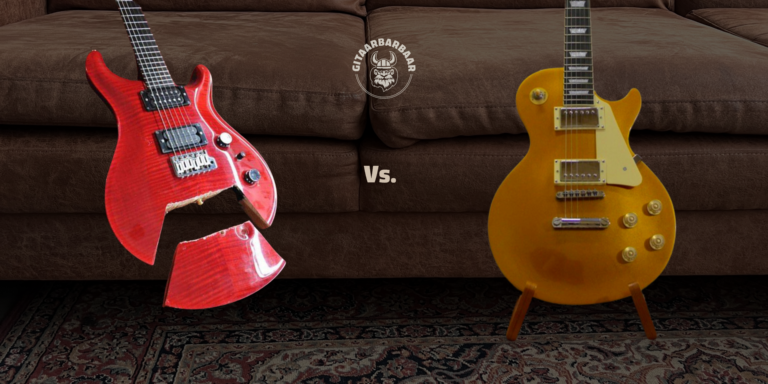
Hopefully, you now know the seven features to consider and can recognize a good guitar and avoid buying a bad one. A well-built guitar with high-quality materials and components not only offers a better playing experience but also lasts longer and delivers superior tone. Good luck in your search for the perfect guitar!
Are you excited and considering buying a new guitar?
The GitaarBarbaar webshop has both new and second-hand guitars in all kinds of different types and often including accessories.


